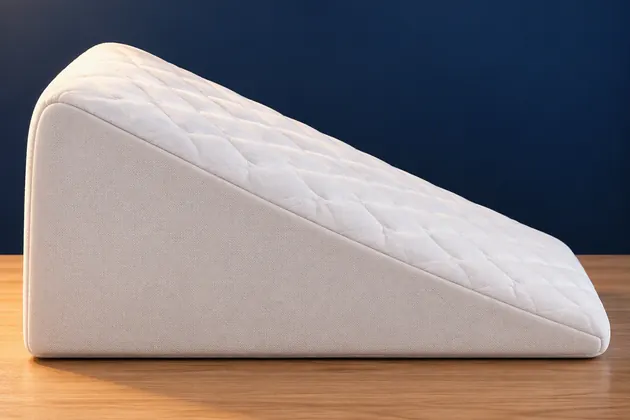
To stop snoring, sleep on your side with your head slightly raised, for example on an anti-snoring wedge pillow. On your back, the tongue and soft palate fall toward the throat and narrow the airway. A body pillow behind your back stops you rolling over in the night.
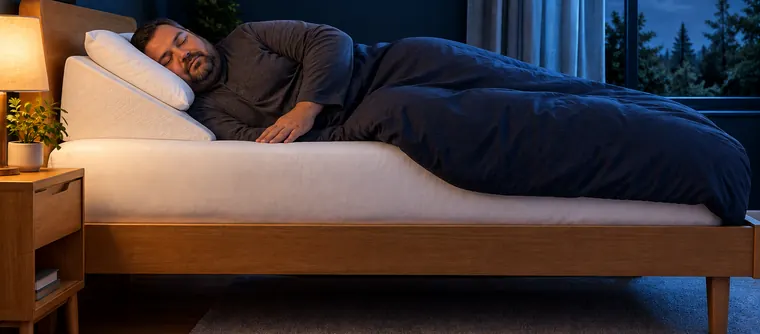
What to get

Full-Length Body Pillow
Behind your back, it keeps you from rolling face up.
Nasal Breathing Strips
Open the nostrils slightly for easier nose breathing.
If your partner snores
White Noise Machine
A steady, soothing sound that masks traffic, neighbours and snoring.
Prices and availability change, so the buttons open current options on Amazon.
Common questions
What is the best pillow for snoring?
A wedge pillow that raises your upper body by about 15 to 20 cm helps keep the airway open, and a body pillow behind your back keeps you sleeping on your side.
Why do I snore more on my back?
Gravity pulls the tongue and soft tissue backward when you lie face up, which narrows the airway and makes the tissue vibrate.
Does raising the head stop snoring?
A modest raise helps many people, especially combined with side sleeping. Stacking soft pillows only bends the neck, so a wedge works better.
Is snoring dangerous?
Simple snoring usually is not. Loud snoring with pauses in breathing, gasping or heavy daytime tiredness can be sleep apnea and should be checked by a doctor.
Last updated 2026-10-14. General information, not medical advice.